
One of the most common reasons people Google “inositol powder benefits” is surprisingly practical: they’re tired of swallowing a handful of capsules every day. Powder feels simpler—until you realize you now have to measure it, mix it, and figure out whether the claims you’ve seen online are actually supported by research.
This guide focuses on what’s best-supported, what’s still uncertain, and how to use inositol powder in a low-regret way. It’s educational content, not medical advice—if you have a diagnosed condition (like PCOS) or take medications, use this as a conversation starter with your clinician.
A quick story: why people switch from capsules to powder
I once spoke to a buyer who did everything “right”: she picked a reputable brand, followed the label, and stayed consistent. Her only problem was math. The effective daily intake she was aiming for would have meant 6–8 capsules per day, depending on capsule size. She stopped—not because the ingredient failed, but because the format did.
The “2 grams vs 500 mg” problem
Many inositol studies use gram-level doses (often in the 2–4 g/day range for myo-inositol). If your capsules are 500 mg, reaching 2 g means four capsules; reaching 4 g means eight. With powder, you can hit those doses more easily—but only if you measure accurately (more on that later).
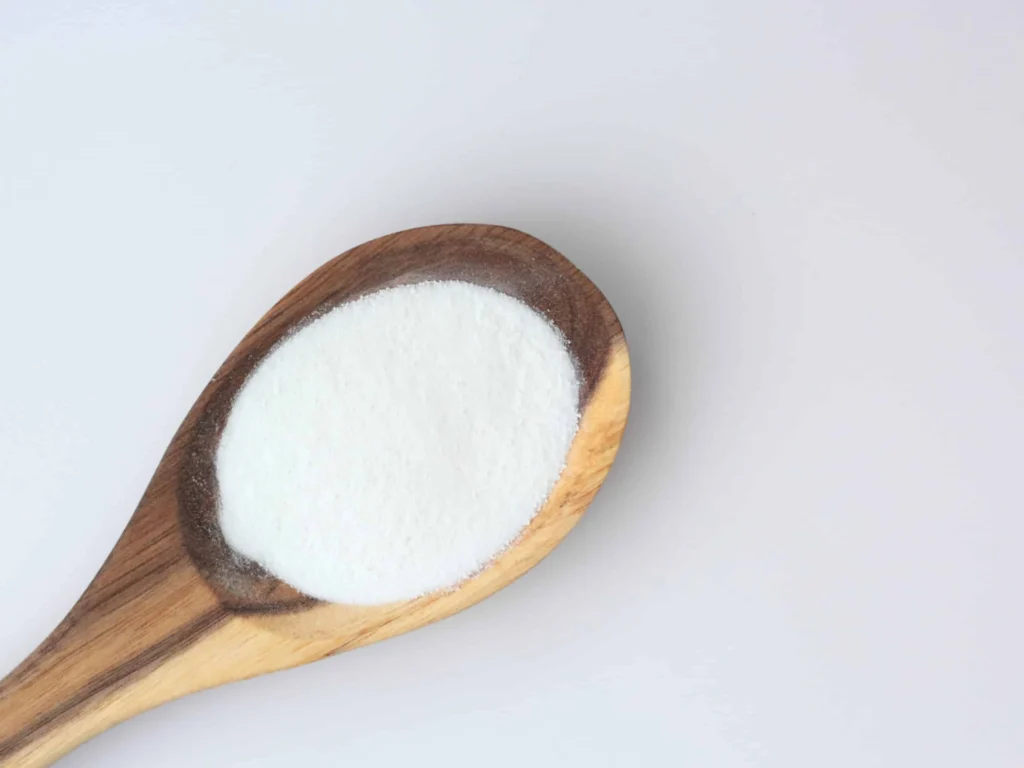
What inositol powder is (and what it isn’t)
Inositol is a naturally occurring compound found in the body and in foods. In supplements, it’s often discussed in the context of cell signaling pathways. Importantly, inositol is not a hormone. People may use it to support metabolic and reproductive health, but it should not be framed as a hormone replacement or a guaranteed “hormone balancer.”
If you want a conservative, evidence-minded overview, the NIH Office of Dietary Supplements (ODS) inositol fact sheet is a solid starting point. It helps anchor expectations and safety language.
Myo-inositol vs D-chiro inositol in plain English
“Inositol” is an umbrella term. Two forms show up most in PCOS-related products:
- Myo-inositol (MI): commonly used in research and mainstream supplements.
- D-chiro-inositol (DCI): sometimes combined with MI, often in a 40:1 MI:DCI ratio.
Think of MI as the “default” form people start with. DCI is the “fine-tuning” add-on in certain formulas—useful in some contexts, unnecessary in others.
Food sources vs supplements: why dose matters
You can get inositol from diet, but the reason supplements matter is dose. Studies that report meaningful changes typically use standardized, repeated dosing. That’s hard to replicate reliably with food alone, especially if you’re aiming for gram-level intake.
Evidence map: which inositol powder benefits are best-supported?
Instead of listing a dozen benefits with equal confidence, it’s more honest—and more useful—to separate them by evidence strength. Below is a practical “evidence map” you can use when deciding whether to try inositol powder, and what to track.
Information Gain #1: Benefit vs evidence strength table
| Potential benefit area | Evidence strength (practical view) | What you can reasonably expect | What you should NOT assume |
|---|---|---|---|
| PCOS-related reproductive support (cycle/ovulation markers) | Stronger (relative to other claims) | Possible improvements in some PCOS outcomes when used consistently; often discussed alongside lifestyle changes | Not a replacement for diagnosis, fertility treatment, or medical management |
| Insulin sensitivity / metabolic markers | Moderate | May support metabolic parameters in some people, especially where insulin resistance is involved | Not a substitute for diabetes care or weight-loss basics |
| Mood, anxiety, sleep | Limited to mixed | Some people report calming effects; research exists but isn’t uniformly strong across all endpoints | Not a guaranteed treatment for anxiety disorders or insomnia |
| Male fertility parameters | Emerging | Potential supportive role in select contexts | Not a universal fix for male-factor infertility |
PCOS and ovulatory function (best-supported area)
PCOS is a complex condition involving reproductive hormones, ovulatory dysfunction, and often insulin resistance. A responsible article shouldn’t imply a supplement “treats PCOS.” What we can do is explain why clinicians and patients discuss inositol at all: it’s often positioned as a supportive tool alongside lifestyle interventions.
For background on PCOS as a clinical entity, see NCBI StatPearls on Polycystic Ovarian Syndrome. This is useful for aligning expectations: PCOS management is multi-factorial, and supplement use should fit into that broader plan.
Insulin sensitivity and metabolic markers
One reason inositol is discussed in PCOS is the metabolic overlap. If your primary goal is metabolic support, the “best case” scenario is usually not dramatic overnight change. It’s incremental improvement that becomes meaningful when paired with: protein-forward meals, sleep regularity, strength training, and appropriate medical care when needed.
Mood, anxiety, and sleep: what the research can and can’t claim
This is where hype often outruns evidence. Some users feel calmer on inositol; some feel nothing; a few feel worse (often due to GI upset or taking too much too fast). If your main reason is anxiety or sleep, treat inositol as an experiment with guardrails: track symptoms, start low, and stop if it backfires.
Male fertility: emerging but not universal
Inositol is sometimes included in male fertility stacks. The key is not to overgeneralize: fertility outcomes depend on many variables (timing, underlying conditions, lifestyle, medical evaluation). Inositol may be supportive for some, but it is not a stand-alone plan.
Dosage & timing: a practical, low-regret way to start
Most people fail with supplements for one of two reasons: they take too little to matter, or they take too much too fast and quit. Powder makes “enough dose” easier, so the main skill becomes titration and measurement.
Typical studied ranges and why split dosing matters
Commonly discussed supplemental ranges for myo-inositol are often in the gram range (frequently 2–4 g/day), sometimes split into two doses. Splitting can improve tolerance—especially if you’re prone to stomach upset.
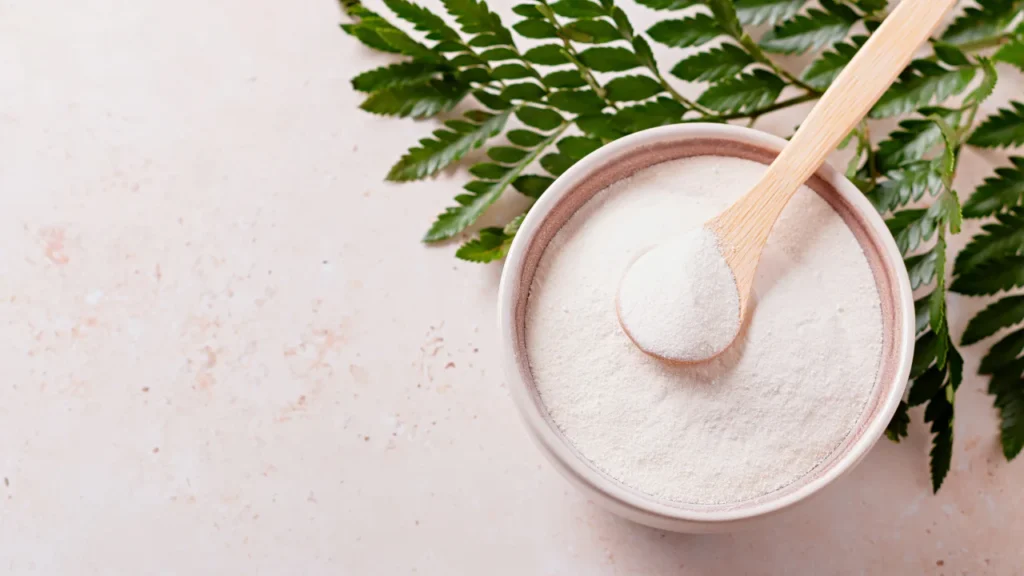
Information Gain #2: A simple dose-ramp protocol (and how to measure)
- Week 1: 1 g/day (split: 0.5 g morning + 0.5 g evening) to test tolerance.
- Weeks 2–4: 2 g/day (split: 1 g + 1 g).
- Weeks 5–12: consider 4 g/day only if you have a clear goal, good tolerance, and a reason to escalate.
Measuring powder accurately:
- Best option: a small digital scale that measures to 0.01 g.
- Second-best: a manufacturer-provided scoop only if it lists grams per level scoop and you level it consistently.
- Avoid: “teaspoon conversions.” Powder density varies and causes large dosing errors.
Best time to take inositol powder
For most people, consistency matters more than the exact hour. If you’re splitting doses, morning + evening is simple. If it makes you feel sleepy, take the larger portion at night. If it upsets your stomach, take it with food.
How long does inositol take to work? Use an evaluation timeline
- First 1–2 weeks: tolerance check (GI comfort, energy, sleep changes).
- Weeks 8–12: this is a more realistic window to judge cycle-related changes or metabolic markers—if they’re going to change.
- After 12 weeks: decide: continue, adjust dose, or stop. If nothing changed and adherence was good, it may not be your lever.
40:1 ratio explained: when “myo + D-chiro” makes sense
The 40:1 MI:DCI ratio shows up everywhere in PCOS products, and it’s easy to assume it’s mandatory. It isn’t always.
The rationale behind 40:1
In simple terms, the ratio is used to mimic a physiological balance that some researchers and formulators aim for. The goal is to support complementary pathways without overemphasizing DCI.
Situations where ratio talk is overkill
If you’re early in your journey, not diagnosed, or simply testing whether inositol agrees with you, starting with myo-inositol alone can be the more conservative choice. You learn whether you tolerate it and whether you see any meaningful change—before adding complexity.
Information Gain #3: Decision matrix (MI only vs 40:1 vs clinician input)
| Your situation | Low-regret choice to discuss/try | Why |
|---|---|---|
| New to inositol; main goal is general metabolic support | Myo-inositol only | Simple, easier to evaluate, fewer variables |
| Diagnosed PCOS; you’re tracking cycle/ovulation markers | Consider MI, and discuss MI+DCI (40:1) with clinician | Higher relevance to the common use-case; still individualized |
| On multiple medications, pregnant, or history of bipolar disorder | Clinician input first | Risk management beats experimentation |
Added value in this section: We don’t treat 40:1 as a magic number. We show when it’s worth considering and when simplicity is safer.
Side effects, interactions, and who should avoid inositol
Inositol is generally considered well-tolerated for many users, but “natural” doesn’t mean “risk-free.” Most side effects are dose-related and happen when people jump straight to high grams.
Common side effects (and how to reduce them)
- GI discomfort (nausea, loose stools): start lower, split doses, take with meals, and increase slowly.
- Headache or fatigue: often improves with dose adjustment or stopping.
High-caution groups (don’t self-experiment)
- Pregnancy: discuss with a clinician, especially if using inositol specifically for pregnancy-related outcomes.
- Bipolar disorder history: any supplement affecting mood should be handled cautiously.
- Medication use (e.g., glucose-lowering drugs): you may need monitoring to avoid unintended changes.
Information Gain #4: “Red flags” checklist—stop and seek medical advice
- Severe or persistent GI symptoms that don’t improve after dose reduction
- Noticeable mood destabilization (agitation, insomnia worsening, unusual mood elevation)
- Symptoms of low blood sugar if you’re on glucose-lowering medication (sweating, shakiness, confusion)
- Any allergic reaction signs (rare but serious)
Powder vs capsules: cost, compliance, and formulation realities
Powder can be cheaper per effective gram and easier for higher-dose protocols. Capsules can be simpler for travel and taste avoidance. The “best” choice is the one you’ll actually take correctly.
Unit economics: cost per effective dose
Here’s a simple way to compare products without falling for marketing:
- Cost per gram = product price ÷ total grams of inositol.
- Cost per day = cost per gram × your daily dose (e.g., 2 g or 4 g).
Information Gain #5: Quick calculator example
If a 250 g bag costs $25:
- Cost per gram = $25 ÷ 250 g = $0.10/g
- At 2 g/day: $0.20/day (~$6/month)
- At 4 g/day: $0.40/day (~$12/month)
Now do the same math for capsules. You’ll often see why powder dominates “gram-dose” use cases.
Taste, solubility, and mixing tips
- Mix with water, or add to smoothies/yogurt if you dislike the taste.
- If clumping happens, dissolve in a small amount first, then dilute.
- For product developers: solubility and mouthfeel matter—particle size and excipients can affect user experience.
How to choose high-quality inositol powder (for consumers & manufacturers)
Quality is where real-world outcomes and compliance meet. A clinically relevant dose doesn’t help if the product has poor identity testing, inconsistent assay, or contamination risk.
What to look for on a COA
- Identity testing: confirms the ingredient is actually inositol.
- Assay/content: percent purity or mg/g.
- Heavy metals: lead/arsenic/cadmium/mercury results and method.
- Microbiology: total plate count, yeast & mold, pathogens as applicable.
- Batch/lot traceability: lot number linked to manufacturing records.
Information Gain #6: B2B spec template (copy/paste starting point)
| Spec item | Why it matters | What to request |
|---|---|---|
| Identification | Prevents substitution/adulteration | Method + result on COA |
| Assay (purity) | Ensures consistent dosing claims | % assay range and method |
| Particle size / appearance | Affects solubility and mouthfeel | Mesh/PSD, appearance description |
| Heavy metals | Compliance and safety | Pb/As/Cd/Hg limits + test results |
| Microbial limits | Food safety, shelf stability | TAMC/TYMC/pathogens |
| Packaging & storage | Prevents moisture caking and degradation | Packaging spec + storage conditions |
| Change control | Prevents surprise reformulations | Written notification process |
Supplier questions that reduce risk
- Do you provide full documentation (COA, SDS, allergen statement, country of origin)?
- What’s the typical batch size and lead time? Is there dual sourcing for continuity?
- How do you control moisture pickup during packaging and shipping?
- Can you share a stability or retest policy?
FAQ
Is inositol powder safe to take daily?
Many people tolerate daily use well, but tolerance varies. Start low, increase slowly, and consult a clinician if you’re pregnant, have a mood disorder history, or take medications.
How much inositol powder should I take per day?
Common supplemental use often starts around 1–2 g/day and may go higher depending on goals and tolerance. Split dosing often helps. Use a scale for accuracy.
Should I take inositol in the morning or at night?
Either can work. If it makes you relaxed or sleepy, move more of the dose to the evening. If it causes stomach upset, take it with meals and split the dose.
How long does inositol take to work for PCOS?
Many people evaluate in an 8–12 week window while tracking cycle-related markers. Earlier changes may be tolerance-related rather than outcome-related.
Can I take inositol with metformin?
Some people do, but you should discuss it with a clinician, especially if you monitor blood glucose or experience symptoms of low blood sugar.
Is powder better than capsules?
Powder often wins for gram-level dosing and cost efficiency. Capsules win for convenience and taste avoidance. The best choice is what you can measure and take consistently.
How BSTBIO can support your inositol powder project
If you’re using this guide to choose a cleaner, more reliable inositol powder, BSTBIO can help behind the scenes. We focus on clear specs, batch documentation (like COA/SDS), and steady supply for both brands and everyday users. Want to compare grades, get a sample, or align on a purchasing checklist? Reach out and tell us your target format and dose.
 English
  French
  German
  Italian
  Japanese
  Korean
  Russian
  Spanish
  Portuguese