キングトランペット茸の効能:このキノコが食卓に上るべき7つの科学的根拠

Quick Summary: King trumpet mushrooms (Pleurotus eryngii) deliver 33-40 calories per 100g with 3.5g of protein, making them one of the most nutrient-dense low-calorie foods available. They contain ergothioneine — a rare antioxidant your body cannot produce — along with beta-glucans that support immune function and may help lower cholesterol. Research published in peer-reviewed journals confirms benefits for heart health, gut microbiome balance, and metabolic function. Their dense, meaty texture also makes them the best-tasting mushroom for anyone exploring plant-based cooking.

What Is King Trumpet Mushroom — And Why Is It Different From Other Mushrooms?

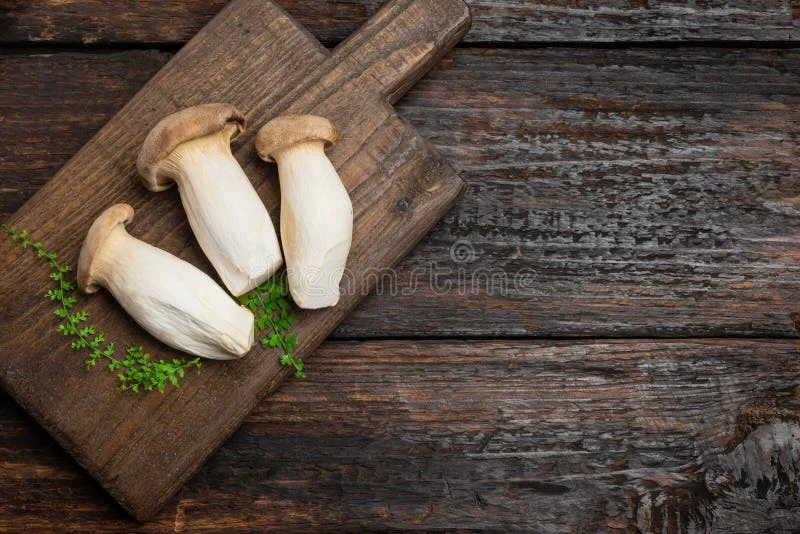
Fresh king trumpet mushrooms with thick white stems and brown caps on wooden cutting board

King trumpet mushroom (also called king oyster mushroom, eryngii, or French horn mushroom) is the largest species in the Pleurotus genus. Unlike the delicate, fan-shaped oyster mushroom (Pleurotus ostreatus), king trumpet has a thick, dense stem that can grow 5-10 cm wide — and that stem is the reason this mushroom has become a staple in plant-based kitchens worldwide.

Here’s the key difference: While most mushrooms have a soft, spongy texture that shrinks dramatically when cooked, king trumpet holds its shape. When you slice the stem into 2 cm rounds and sear them in hot oil, you get a golden crust on the outside while the inside stays firm and juicy. On Reddit’s r/traderjoes, users describe them as “really, really dense compared to most shrooms — they don’t lose their shape or take on liquids the way you’d imagine.”

Originally from Mediterranean grasslands where it grows on buried roots of plants in the Apiaceae family (think fennel and wild carrot), Pleurotus eryngii was first cultivated commercially in the 1970s-80s. Today, it is one of the most popular cultivated mushrooms in South Korea — where P. eryngii (known as saesongi) has been a major crop since its introduction in the 1990s — and is grown at scale in China, Japan, Italy, and increasingly in North America. The global king oyster mushroom market was valued at approximately $3.2 billion in 2025, with projections reaching $6.1 billion by 2034 (Dataintelo).

One important clarification: King trumpet mushroom is NOT the same as the common oyster mushroom. They belong to the same genus (Pleurotus) but are different species. The nutritional profiles are similar, but king trumpet’s denser texture makes it superior for cooking applications where you want a “meaty” bite.

Nutritional Profile: What You Actually Get Per 100g

King trumpet mushrooms are low in calories but surprisingly dense in several key nutrients. Here’s what the data shows per 100g of raw king trumpet mushroom:

栄養素Amount% Daily Value (approx.)
カロリー33-40 kcal~2%
タンパク質3.5 g7%
Total Carbohydrates5-7 g2-3%
食物繊維2-3 g8-12%
Total Fat0.3 g<1%
Niacin (Vitamin B3)4.3 mg27%
Riboflavin (Vitamin B2)0.3 mg23%
Pantothenic Acid (Vitamin B5)1.1 mg22%
Folate38 mcg10%
カリウム420 mg9%
Selenium9.3 mcg17%
Iron1.3 mg7%
Phosphorus120 mg10%

Sources: USDA FoodData Central, South Mill Champs, Prospre (USDA-derived data).

What jumps out: The B vitamin content is remarkable for a food this low in calories. A 100g serving delivers over a quarter of your daily niacin and nearly a quarter of your riboflavin. For comparison, white button mushrooms provide about 15% of daily niacin per 100g — king trumpet offers nearly double that.

The protein-to-calorie ratio is also notable: at 3.5g per 100g with only 33-40 calories, king trumpet mushrooms rank among the highest protein-per-calorie ratios in the mushroom family. For anyone tracking macronutrients on a plant-based diet, that’s a meaningful number.

7 Health Benefits of King Trumpet Mushroom (With Research)

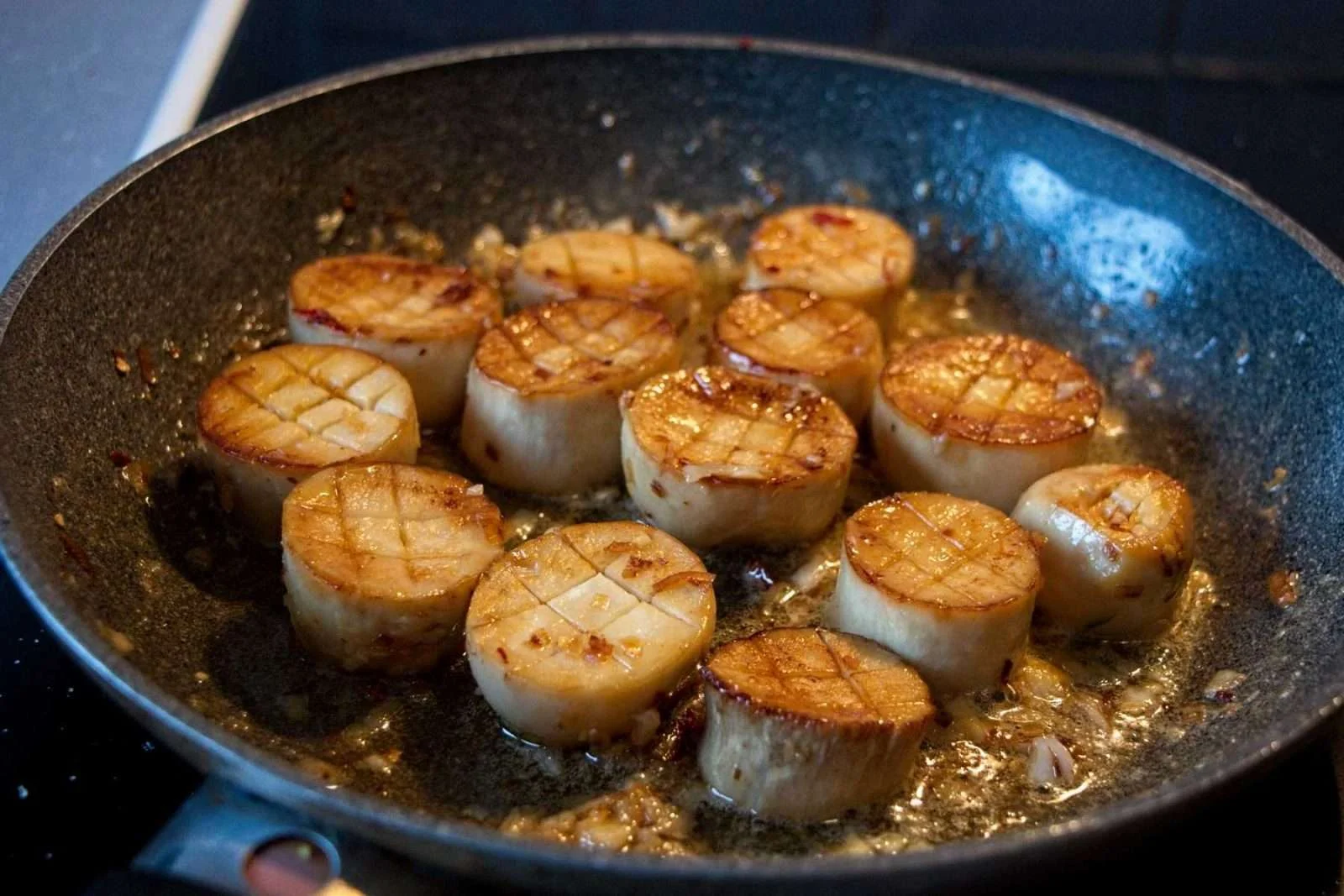
Pan-seared king trumpet mushroom scallops with golden crust served on white plate

1. Rich in Ergothioneine — The Antioxidant Your Body Can’t Make

King trumpet mushrooms are among the richest dietary sources of ergothioneine, a naturally occurring amino acid that functions as a potent antioxidant. What makes ergothioneine unique is that human cells have a specific transport mechanism (called ETT/SLC22A4) to absorb it — suggesting our bodies evolved to depend on this compound from external sources.

A study published in FEBS Letters measured ergothioneine at 54.17 mg per 100g dry weight in Pleurotus eryngii. Another compilation from Purovitalis reports values up to 1,720 mg per 100g dry weight in certain preparations. The range depends heavily on growing substrate and preparation method.

What the research says: A 2016 study from the National University of Singapore (Cheah IK et al., Biochem. Biophys. Res. Commun., PMID: 27444382) found that ergothioneine levels in the body decline with age, and people with lower levels showed higher rates of cognitive decline. While king trumpet is not the absolute highest source (porcini mushrooms contain more), oyster mushrooms including P. eryngii have roughly five times more ergothioneine than white button mushrooms, according to NutritionFacts.org.

2. Beta-Glucans May Support Immune Function

Beta-glucans are polysaccharides found in mushroom cell walls that have been shown to stimulate immune cell activity. Pleurotus eryngii contains particularly high concentrations of beta-glucans compared to other Pleurotus species.

A 2017 study published in the International Journal of Molecular Sciences found that P. eryngii had the highest total glucan concentrations among Pleurotus species tested. Research from Megazyme (Sari et al. 2017) measured beta-glucan content at 85.4 mg per gram of dry weight in P. eryngii.

A 2022 PMC study (PMC9108243) specifically isolated a beta-1,6-glucan from P. eryngii and demonstrated that it “modulates immunity and gut microbiota” in preclinical models. The mechanism involves activation of macrophages and natural killer cells — key components of the innate immune system.

Important caveat: Most immune-related studies are preclinical (lab and animal studies). Human clinical trials specifically on king trumpet mushroom and immune function are limited. The beta-glucan mechanism is well-established across mushroom species, but dosing recommendations for humans have not been standardized.

3. May Help Lower Cholesterol and Support Heart Health

Multiple studies suggest that Pleurotus eryngii contains compounds that support cardiovascular health. Two mechanisms appear to be at work:

Beta-glucans and cholesterol: When fermented by gut bacteria, beta-glucans produce short-chain fatty acids that can reduce the liver’s cholesterol production. A 2013 study (PMC3730794) found that diets supplemented with 5% P. eryngii significantly reduced body weight and atherogenic lipid profiles in hypercholesterolemic rats, with no detrimental effects on liver and kidney function.

Natural lovastatin: Pleurotus species contain lovastatin — the same compound found in prescription statin medications. A 2016 review in the International Journal of Food Properties confirmed that Pleurotus species contain lovastatin that may help reduce oxidative stress, hypertension, and atherosclerosis. However, the concentration in mushrooms is described as “comparable to low supplemental doses” (Virginia Spores, 2026) — meaningful as part of a dietary pattern, but not a replacement for medication.

A related 2011 clinical trial (cited by Healthline) found that 30g of dried oyster mushroom soup daily for 21 days decreased triglycerides, total cholesterol, and oxidized LDL in 20 human participants.

4. Supports Gut Health and Microbiome Balance

Your gut microbiome — the trillions of bacteria living in your digestive tract — plays a role in everything from immunity to mental health. King trumpet mushrooms contain prebiotic compounds that may help promote a healthy gut environment.

A 2023 study published in PMC (PMC9865116) found that P. eryngii polysaccharides promoted beneficial bacterial growth during in vitro fermentation. A 2025 study in the Journal of Agricultural and Food Chemistry (ACS Publications) showed that P. eryngii “distinctively impacts the fecal microbiota of healthy older adults.”

A comprehensive 2025 review in Comprehensive Reviews in Food Science and Food Safety (IFT/Wiley) concluded that “preclinical studies have shown that Pleurotus species can reduce inflammatory markers, modulate gut microbiota, and improve lipid and glucose metabolism.”

5. May Aid Weight Management

At 33-40 calories per 100g with 2-3g of fiber, king trumpet mushrooms are an exceptionally low-calorie, high-satiety food. But the benefits may go beyond simple calorie counting.

A 2024 study in the International Journal of Biological Macromolecules (ScienceDirect) found that “dietary intake of whole P. eryngii significantly inhibited abnormal gain of body weight and adipose tissue weight, improved glucose tolerance” in animal models. The mechanism appears to involve both the fiber content (which slows digestion) and specific polysaccharides that modulate gut microbiota composition.

From a practical cooking standpoint, the dense texture of king trumpet means you can use less of it to feel satisfied compared to softer mushrooms. A Reddit user on r/veganrecipes noted that king oyster mushrooms “fill you up differently” than other vegetables — the chewiness mimics the satisfaction of eating meat.

6. Antioxidant and Anti-Inflammatory Properties

Multiple studies confirm that Pleurotus species contain significant antioxidant compounds. A 2023 study (PMC10005153) found that P. eryngii polysaccharides “might be used as functional food to potentiate the antioxidant defenses and reduce oxidative stress.”

A 2022 randomized controlled trial (PMC9686718) tested a P. eryngii mushroom snack on metabolically unhealthy patients, finding “potential antidiabetic, antiobesity, anti-inflammatory, and antioxidant health benefits.”

7. Versatile Meat Substitute (The Practical Health Benefit)

This isn’t a “study says” benefit — it’s a practical one. King trumpet mushrooms have become the go-to mushroom for plant-based cooking because their texture genuinely mimics seafood and meat.

The thick stem, when cut into rounds, produces “scallops” that develop a golden sear in a hot pan. When shredded, they make convincing “pulled pork.” When sliced thin and marinated, they become “bacon.” A Reddit user in r/vegan described king oyster mushroom bacon as “addictively delicious — I’ve seen omnivores eat it by the fistful and ask for the recipe.”

The health benefit here is substitution: replacing processed meat substitutes (which often contain soy protein isolate, methylcellulose, and other additives) with a whole food that delivers nutrition and satisfaction without the ingredient list.

King Trumpet Mushroom vs. Other Popular Mushrooms

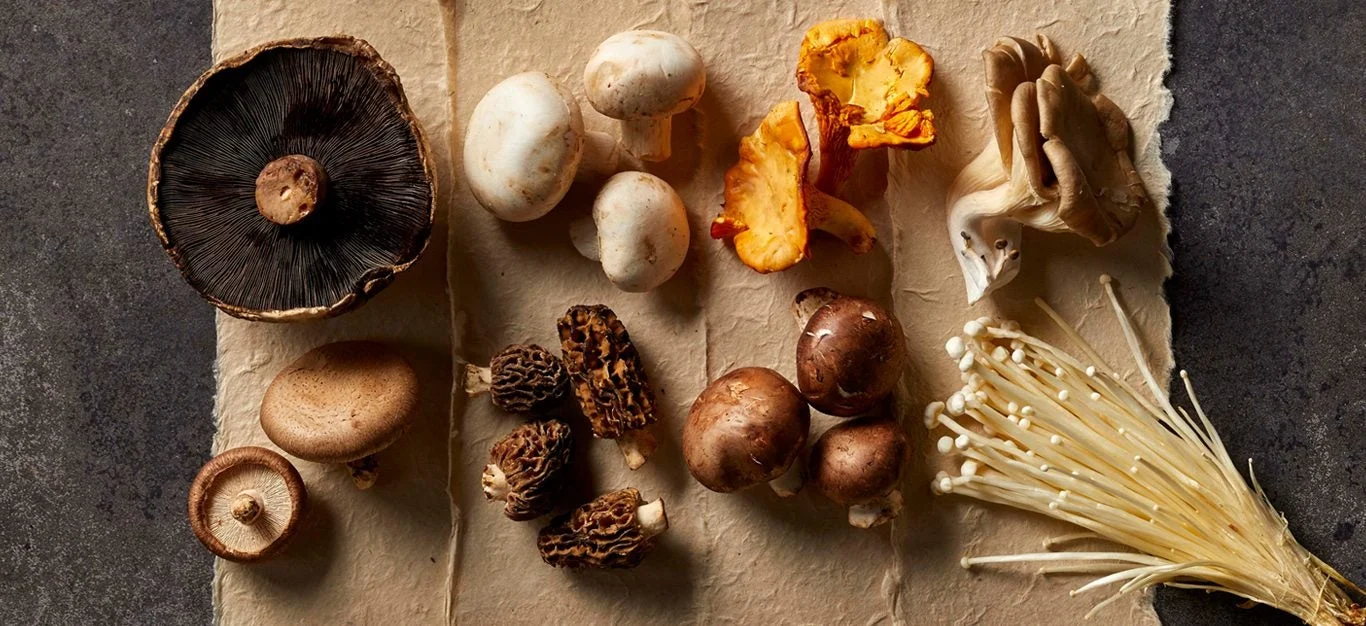
Assorted mushroom varieties displayed side by side for comparison

How does king trumpet stack up against the mushrooms you might already be eating? Here’s a direct comparison:

特徴King Trumpet (P. eryngii)Shiitake (L. edodes)Common Oyster (P. ostreatus)Maitake (G. frondosa)
Calories/100g33-403428-3331
Protein/100g3.5 g2.2 g2.9-3.3 g1.9 g
Fiber/100g2-3 g2.5 g2 g2.7 g
Fat/100g0.3 g0.5 g0.3 g0.2 g
Protein-to-calorie ratioBest中程度グッド低い
TextureDense, meaty, holds shapeTender, slightly chewySoft, delicateFeathery, layered
Best cooking methodSearing, grilling, stir-frySoups, stir-fry, tempuraQuick sauté, saladsRoasting, miso soup
Meat substitute potential素晴らしい低い中程度低い
Ergothioneine rank高い中程度高い中程度
Global availabilityGood (Asian markets, Whole Foods, Trader Joe’s)素晴らしいグッド中程度

Sources: USDA FoodData Central; Healthline; Verywell Fit; Versus.com.

Key takeaway: King trumpet mushrooms win on protein content, texture versatility, and meat-substitute potential. Shiitake offers more B6. Common oyster mushrooms are slightly lower in calories. Maitake provides more fiber per gram. For most health-focused home cooks, the best approach is rotating between varieties.

How to Cook King Trumpet Mushroom (3 Methods That Actually Work)

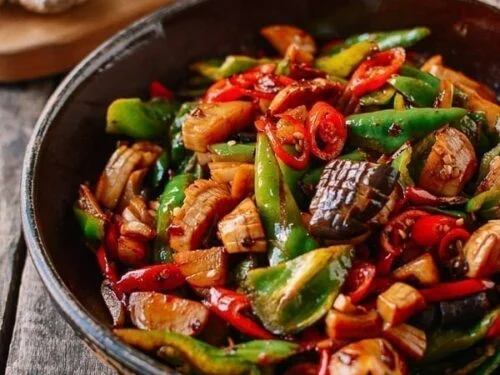
Spicy king trumpet mushroom stir fry with vegetables in a wok

I’ve spent time testing different approaches with king trumpet mushrooms, and here are the three methods that consistently produce the best results:

Method 1: Pan-Seared “Scallops” (The Crowd Pleaser)

Cut the stem into 2.5 cm thick rounds. Pat them completely dry with paper towels — this step matters more than anything else for getting a good sear. Heat a cast iron skillet over medium-high heat with 1 tablespoon of olive oil or avocado oil. Place the rounds flat-side down and cook for 3-4 minutes without moving them until a deep golden crust forms. Flip once, add a clove of minced garlic and a knob of butter (or vegan butter), baste for 1-2 minutes.

What I’ve learned: The number one mistake people make is using too small a pan or too many pieces at once. The mushrooms release moisture, and if they’re crowded, they steam instead of sear. Leave at least 1 cm between each piece.

Method 2: Shredded “Pulled” King Oyster (Meal Prep Favorite)

Use a fork to shred the stems lengthwise into thin strips. Toss with a tablespoon of soy sauce, a teaspoon of smoked paprika, and a pinch of black pepper. Spread on a parchment-lined baking sheet and roast at 200°C (400°F) for 20 minutes, stirring once halfway through.

Why this works: Shredding exposes more surface area, which means more Maillard browning and more crispy edges. The soy sauce provides umami depth. This preparation stores well in the fridge for 3-4 days.

Method 3: Korean BBQ-Style Slices (Quick Weeknight Dinner)

Slice the stems into thin half-moons (about 3mm thick). Toss with sesame oil, gochujang (Korean chili paste), a splash of rice vinegar, and a pinch of sugar. Cook in a very hot wok or flat griddle for 2-3 minutes until slightly charred at the edges.

Pro tip from Reddit (r/traderjoes): “Slice them into coins and leave them in the lower part of the grill, in the path of the flames.” The direct heat caramelizes the natural sugars and creates a smoky flavor that’s remarkably close to grilled scallops.

Common Mistakes to Avoid

  • Don’t wash under running water — mushrooms absorb water like sponges. Wipe with a damp paper towel instead.
  • Don’t cook from cold — let them come to room temperature for 10 minutes before cooking.
  • Don’t crowd the pan — cook in batches if necessary. Crowding = steaming = soggy mushrooms.
  • Don’t skip the drying step — this is the single most important technique for achieving a good sear.

Are There Any Side Effects or Safety Concerns?

King trumpet mushrooms are generally recognized as safe when consumed as food. No clinical studies have reported significant side effects from eating Pleurotus eryngii as part of a normal diet. However, there are a few things to keep in mind:

Allergic reactions: As with any mushroom, some people may experience allergic reactions. If you’ve never eaten king trumpet before, start with a small portion.

Digestive adjustment: The high fiber content (2-3g per 100g) may cause mild digestive discomfort if you’re not used to eating fiber-rich foods. Gradually increase your intake rather than eating large quantities at once.

Cooking before eating recommended: While some sources suggest king trumpet can be eaten raw, cooking improves both digestibility and nutrient bioavailability. The cell walls of mushrooms contain chitin, which is broken down by heat, making nutrients more accessible.

Medication interactions: If you take statin medications for cholesterol, the natural lovastatin in king trumpet mushrooms could theoretically add to the effect. While the amount in dietary mushrooms is small, it’s worth mentioning to your doctor if you eat large quantities regularly.

Pregnancy and breastfeeding: No specific adverse effects have been reported, but as with any food, moderate consumption is sensible.

Wild vs. cultivated: Never eat wild mushrooms unless you’re an expert mycologist. The king trumpet mushrooms sold in grocery stores and Asian markets are commercially cultivated and safe.

King Trumpet Mushroom Supplements vs. Fresh: What’s the Difference?

You’ll find king trumpet mushroom in two main forms: fresh (or dried) mushrooms and powdered supplements/extracts. Here’s an honest comparison:

ファクターFresh/Dried MushroomsSupplements/Extracts
Beta-glucan contentNaturally present in cell wallsConcentrated (check label for %)
ErgothioneineプレゼントMay be higher per serving
繊維2-3g per 100gUsually minimal
タンパク質3.5g per 100gNegligible
カロリー33-40 per 100gVaries (usually 10-20 per serving)
Culinary valueFull flavor + texturePowder/capsule only
コスト$5-10/lb (varies by region)$20-40/month
Whole food matrixYes (nutrients work together)Isolated compounds

My take: If your goal is general health maintenance, eating fresh king trumpet mushrooms 2-3 times per week provides benefits from the whole food matrix — the combination of beta-glucans, ergothioneine, fiber, B vitamins, and other compounds that work synergistically.

Supplements may make more sense if you specifically want concentrated beta-glucans or ergothioneine and don’t enjoy eating mushrooms. But look for products that specify beta-glucan percentage on the label (aim for >20% beta-glucans), and choose dual-extracted (hot water + alcohol) products, which capture both water-soluble and alcohol-soluble compounds.

A note of honesty: I’m not aware of robust head-to-head clinical trials comparing fresh king trumpet consumption to supplementation for any specific health outcome. The recommendation above is based on general nutritional science principles rather than king trumpet-specific studies.

How to Select, Store, and Prepare King Trumpet Mushrooms

What to Look For When Buying

  • Stem should be firm and plump — avoid mushrooms with shriveled or wrinkled stems
  • Color should be white to cream — brown spots or discoloration indicate age
  • Cap should be intact — a broken or slimy cap means the mushroom is past its prime
  • Smell should be mild and earthy — any sour or ammonia-like odor means spoilage
  • Size doesn’t matter much — both small and large specimens cook well, though larger stems are better for “scallop” preparations

Storage Tips

King trumpet mushrooms have one of the longest shelf lives of any fresh mushroom — up to 1-2 weeks when stored properly, compared to 3-5 days for most other varieties.

  • Store in a paper bag (not plastic) in the refrigerator
  • Place on a shelf, not in the crisper drawer (too much humidity causes slime)
  • Don’t wash until ready to use
  • If you need to store longer, slice and freeze on a baking sheet, then transfer to a freezer bag — they keep for 2-3 months frozen

Cleaning

Wipe with a damp paper towel or mushroom brush. Avoid soaking or rinsing under running water — mushrooms absorb liquid readily, which interferes with cooking. If they’re particularly dirty, use a quick rinse and immediately pat completely dry.

Where to Buy King Trumpet Mushrooms

King trumpet mushrooms have become increasingly available in mainstream grocery stores. Here’s where to look:

  • Asian grocery stores — consistently the best selection and most competitive prices ($4-6/lb)
  • Whole Foods Market — carries them seasonally and sometimes year-round
  • Trader Joe’s — has featured them as a seasonal item (check the produce section)
  • Local farmers’ markets — some specialty mushroom growers sell directly
  • Online — dried king trumpet mushrooms are available on Amazon and from specialty retailers

If fresh king trumpet isn’t available in your area, dried king trumpet mushrooms are an excellent alternative. They have a more concentrated flavor and can be rehydrated in warm water for 20-30 minutes. The soaking liquid makes an excellent mushroom broth.

Summary: Should You Add King Trumpet Mushroom to Your Diet?

After spending time with the research and cooking with these mushrooms extensively, here’s my honest assessment:

King trumpet mushrooms earn their “king” title for three reasons:

  1. Nutritional density — At 33-40 calories with 3.5g protein and significant B vitamins, they’re one of the most nutrient-efficient foods you can eat. The ergothioneine and beta-glucan content add layers of functional benefit that go beyond basic nutrition.
  2. Cooking versatility — No other mushroom comes close in terms of texture. The ability to sear, grill, shred, or slice them into various shapes makes them genuinely useful in the kitchen, not just tolerable.
  3. Science-backed benefits — While I want to be clear that many studies are preclinical, the body of research supporting Pleurotus eryngii’s effects on cholesterol, gut health, and immune function is growing and consistent. The ergothioneine story alone — that humans have evolved a specific transport system for this mushroom-derived compound — is compelling.

What I wouldn’t claim: King trumpet mushrooms are not a superfood that will cure disease. They’re a nutritious, versatile whole food that happens to contain some bioactive compounds with promising research behind them. The healthiest approach is incorporating them as part of a varied diet alongside other mushroom species and vegetables.

The practical bottom line: If you’re looking to eat more plant-based meals, reduce processed meat substitutes, or simply add more nutrient-dense foods to your routine, king trumpet mushrooms are one of the best investments you can make at the grocery store. At $5-10 per pound and with a week-long shelf life, they’re practical, affordable, and — when cooked right — genuinely delicious.

関連商品
jaJapanese

お困りですか?

私たちは、お客様に高品質の製品を提供するよう努めています。情報サンプルと見積もりを要求する、私達に連絡する!